Golf Training Aids for Winter: Where to Start?

Make New Friends, Play More Golf
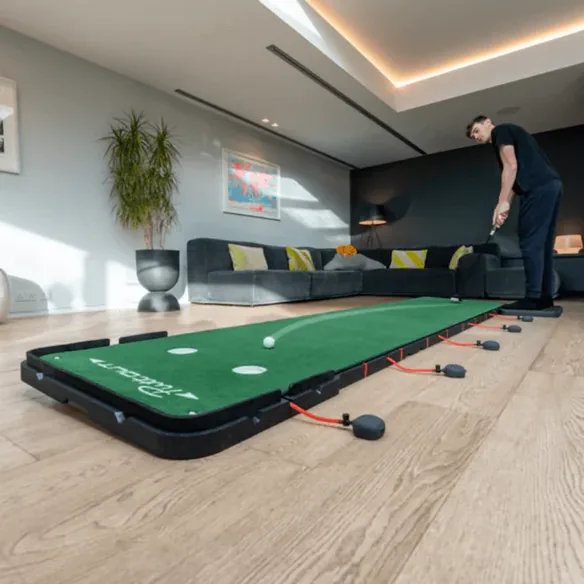
Golfer practising on an indoor putting mat at home

Practice Makes Perfect-ish!

Living in the UK, we all know the weather doesn’t do us many favours once the clocks go back. You’ll probably play less through the colder months, and the light fades before most of us have finished work.

However, winter offers a useful opportunity to work on a specific weakness, maintain your feel and build a practice routine you can carry into the season. That work could eventually show up in your scores and your handicap.

The trick is choosing an aid that suits what you want to improve, the space you have and how often you’ll realistically use it.

Ian Mullins, Editor of The Social Golfer, looks at the options.


Which golf training aid suits your game?

Before you start shopping, use this table to narrow down your options.

Training aidWhat it can help withSpace neededMain limitation
Putting matStart line and repeatable putting practiceA clear, level strip of floorCannot reproduce the variety of real greens
Putting mirror or gatesSetup checks and feedback on your start lineEnough room for a putting strokeNeeds correct setup and a clear practice goal
Chipping netLanding-point practice and short-game targetsA clear garden area or suitable enclosed spaceDoes not reproduce how a ball reacts on a green
Alignment sticksAim, ball position and setup reference pointsEnough room to address the ball safelyCannot diagnose the cause of a swing fault
Tempo trainerRhythm, balance and swing awarenessFull clearance for the trainer’s entire swingDoes not show the resulting ball flight
Practice net and hitting matStrike practice and regular full swingsA dedicated area with safe clearance and containmentA basic net gives little feedback on shot direction
Launch monitorDistance and consistency, depending on the modelVaries by device and setupIndoor suitability and available measurements vary
Resistance bandsWarm-ups and controlled strength exercisesA small, clear exercise areaExercise choice and technique must suit the individual

On smaller screens, swipe across the table to see all four columns.
 

Start with your game, not the gadget

Start by asking yourself what cost you shots this year.

Was it three-putts, thin chips, a slice off the tee or tired legs over the back nine? Your answer should guide your practice plan.

If you’re unsure what’s causing the problem, consider a golf lesson before buying another gadget.

Then look at the space available in your home or garden. A hallway, spare room and single-car garage each offer different opportunities. Think about your schedule too: ten minutes a few evenings a week calls for something quick to set up and put away.

It’s the same logic as deciding what’s worth buying new and what isn’t when you’re kitting out your bag: spend where it helps and keep the rest simple.

Once you have a clear practice goal, browsing golf training aids by area of your game may help narrow the choice. Check what each aid helps you practise and how you’ll recognise improvement.

Putting aids you can use indoors

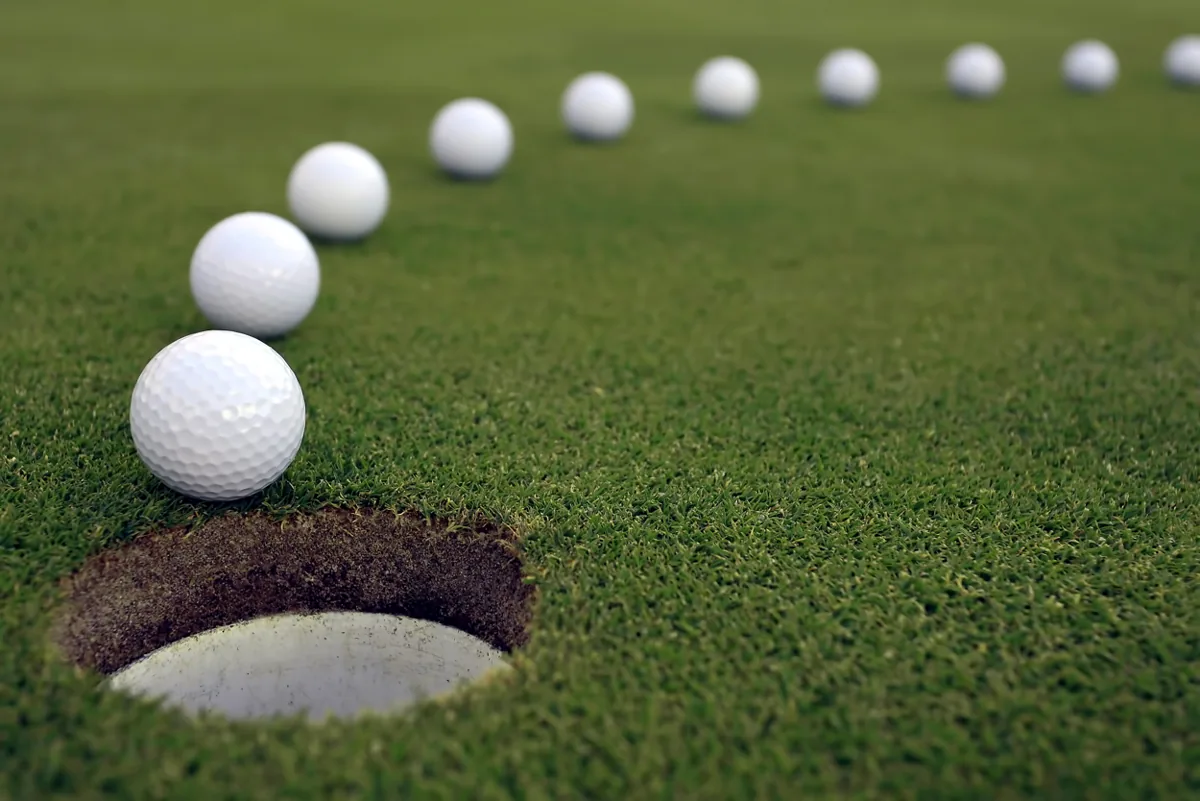
Golf balls lined up towards a hole on a putting green

Putting is one of the easiest parts of golf to practise at home.

A putting mat provides a consistent surface, while a putting mirror can help you check your setup. Putting gates give straightforward feedback on whether you’re starting the ball along your intended line.

Choose a task you can measure. For example, record how many putts you can roll through a gate from a fixed distance, then repeat the same exercise next week. That gives each session a purpose beyond simply hitting putts across the room.

Mats and suitable carpets can help with start line and repeatability, but they cannot recreate the changing pace, slopes and surfaces of real greens. You’ll still need time on a practice green to work on reading putts and adapting your distance control.
 

Chipping and pitching in a small space

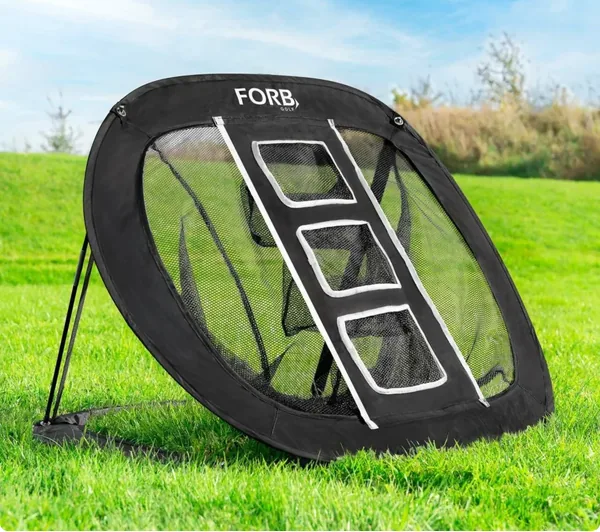
A good chipping net gives you a clear target for short-game practice. In a suitable garden or enclosed practice area, try landing a handful of chips in the same target zone before moving to another.

Keep the task simple. Consistent contact and a repeatable landing point are useful goals; merely getting the ball into the net tells you less about how you achieved it.

Compact chipping net with three target zones

A few practical checks can help:

  • Place a towel a short distance behind the ball to provide feedback on whether the club is striking the ground too early. Start with gentle chips and position it so the club cannot snag it.
  • Use a suitable impact spray on the clubface if you want to check where you’re making contact.
  • Consider foam or airflow balls where real balls are unsuitable, while still allowing a clear hitting area.
  • Check clearance around the club, protect nearby surfaces and make sure missed shots are contained.
  • Begin with short swings and only increase their length when the space allows.

“We have to make a decision if we’re going low or high. That helps us commit to the shot.”

— Phil Mickelson, in his The Art of Chipping clinic, as quoted by GOLF.com
Swing aids for winter

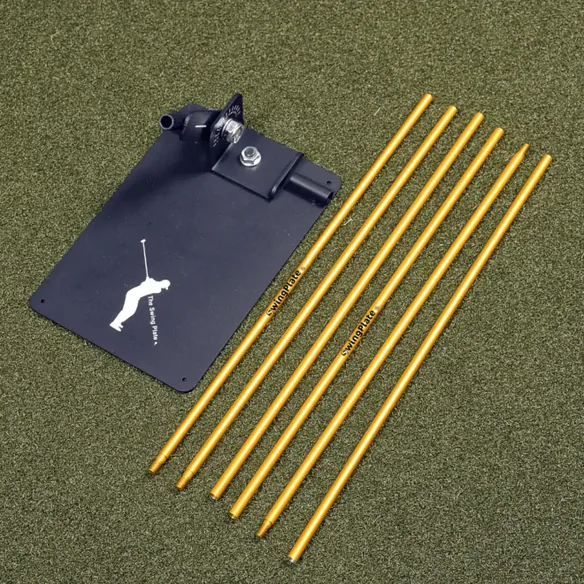
Gold golf alignment sticks beside a Swing Plate base

Alignment sticks are simple, versatile tools for checking aim and ball position. Placed on the ground, they give you reference points that are easy to revisit between sessions.

They can support a coach’s drills too, although they won’t explain why a slice or another fault is happening.

A tempo trainer may help you explore rhythm and balance, while a grip trainer can provide a reference for hand placement. With either, make sure you understand the intended exercise before repeating it all winter.

The useful question is: what feedback does this aid give me?

You should be able to explain what you’re practising, recognise a successful repetition and check whether it carries over when you remove the aid. If a fault keeps returning, ask a qualified golf coach to help identify the cause.

You may already have another useful practice tool in your pocket. A phone and tripod let you record your setup and swing, particularly when working on changes recommended by your coach. Keep the camera position and angle consistent so you can compare sessions more accurately.

Before swinging a club or trainer indoors, check the clearance above, behind and around you, including space for the follow-through—or you may find yourself replacing the lampshades!
 

Nets, mats and launch monitors

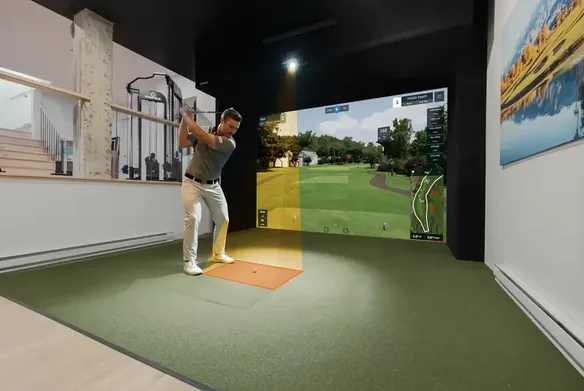
Golfer swinging in an indoor golf simulator

Choosing a practice net

A practice net can make regular hitting sessions easier if you have a suitable space, but there are a few things to consider:

  • Check that it is designed for your intended clubs and ball speeds.
  • Follow its installation instructions and allow for missed shots and rebounds.
  • Remember that a basic net won’t show the full flight of the ball. Solid contact doesn’t necessarily mean the shot would have finished on the fairway.
  • Combine net practice with occasional range sessions or suitable ball-flight feedback.

Choosing a practice mat

With plenty of products available online and in golf shops, finding a mat is easy. Choosing a suitable one takes a little more care.

Look beyond thickness alone. The hitting surface, base, stability and how it responds to heavy strikes all matter.

Some mats allow the club to slide into the ball after contacting the surface too early, making a poor strike feel better than it was.

Choose a mat intended for repeated golf practice and use it on the recommended surface. If hitting from it causes discomfort, stop and review the setup.
 

Do you need a launch monitor?

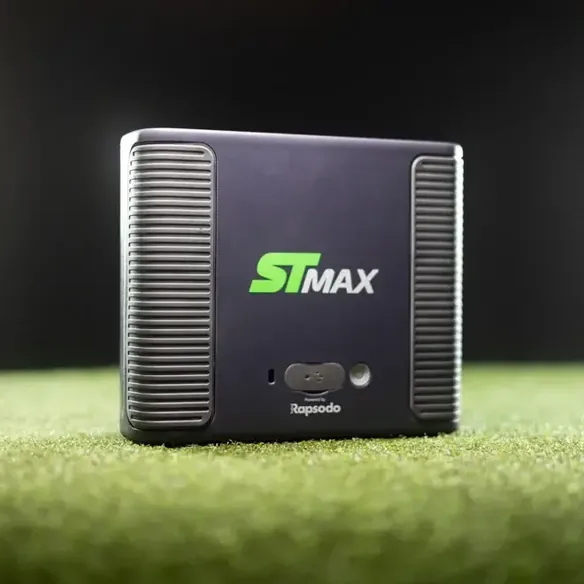
SkyTrak ST MAX launch monitor on a hitting surface

A launch monitor can add useful feedback, but decide which measurements you want before paying for a long list of features.

Carry distance and shot-to-shot consistency can support useful practice. If you also want launch direction, spin or clubface information, check the model’s specifications carefully: those measurements are not available on every device.

Before buying for home use, check:

  • Indoor compatibility.
  • Required distances behind and in front of the ball.
  • Which measurements are available in your intended setup.
  • Any subscription costs.

A device that suits an outdoor range may not suit your available space.

An NCG review comparing the Shot Scope LM1 with Trackman offers an example of what a simpler monitor can provide for speed and distance practice.

However, the testing described was at the range and on the course, so it should not be taken as proof of performance in a garage.

 

Fitness and mobility for golfers

Runner checking a sports watch during an outdoor workout

Winter is also an opportunity to maintain your general fitness and prepare for the walking and movement involved in golf. It’s an area that can easily get overlooked.

Consider a manageable exercise routine. That could involve more walking, suitable strength exercises at home or going to the gym.

Resistance bands are another option for a simple warm-up or strength routine, provided you choose appropriate exercises and use them correctly. You don’t need a room full of equipment to establish a regular habit.

Start at a manageable level and build gradually. If you’re returning from injury, have ongoing pain or are unsure which exercises suit you, ask a physiotherapist or appropriately qualified trainer for advice.

“When it comes to fitness and coaching I’ve learned you have to work smarter and better instead of just hard.”

— Pádraig Harrington, discussing his winter preparation with Irish Golf Desk.


Getting the best value—and knowing what to skip

Compare each aid against four questions:

  • Does it address something I need to improve?
  • Can I use it safely in the space available?
  • Will I understand the feedback it gives me?
  • Will I use it regularly enough to justify the cost?

Be cautious about promises to fix a slice in a few swings or transform your game without practice.

A tour professional’s endorsement may attract your attention, but it doesn’t establish whether the product suits your needs.

You can also start without buying anything. A mirror, a clear target and a notebook for recording results may be enough to establish a useful routine.

Finally, plan your practice

Pick one priority and give each session a measurable task. That might be starting putts through a gate, landing chips in a target zone or rehearsing a setup change agreed with your coach.

Keep sessions short enough to fit comfortably into your week.

Record a simple result, revisit it regularly and include practice without the aid to check what you’ve learned.

The most useful training aid is one that helps you practise with purpose—and earns its place through regular use.

Good luck!

Frequently Asked Questions

What golf training aids work well in a small home?

Putting gates, a putting mirror and a compact putting mat are practical options because they need relatively little space. Check the mat’s dimensions before buying and make sure you can take your normal putting stance. Full-swing aids need clearance for the entire swing, including the follow-through.

Can you improve your golf swing without hitting a ball?

You can work on setup, movement and rhythm through slow rehearsals, mirror work and suitable drills. You’ll still need to hit balls to check how those changes affect contact and ball flight.

Is practising putting on carpet worthwhile?

Yes, if the surface allows the ball to roll consistently. Use it for start-line exercises and repeatable practice, but don’t assume its speed or roll will match a putting green.

Can you practise golf at home without buying training aids?

Yes. You can rehearse your setup in a mirror, roll putts towards a small target or practise a movement your coach has shown you. Give each exercise a clear goal and record your results.

Is a golf practice net enough to improve your swing?

A net makes regular hitting practice more convenient, but it gives limited feedback on where your shots would finish. Use it for a specific drill or contact practice, then check your ball flight at the range. Otherwise, you could repeat a poor shot without realising it.

Should you buy a training aid or book a golf lesson first?

If you don’t understand what causes your problem, book a lesson first. A qualified coach can identify what needs attention and suggest an appropriate drill or aid. If you already have a clear practice plan, an aid can help you follow it between lessons.

Are golf training aids suitable for beginners?

Simple aids can be useful when beginners understand how to use them. Alignment sticks, putting gates and grip trainers can support lessons, while a coach can help prevent repeated practice of an unsuitable movement.

How often should you practise over winter?

Start with two or three short sessions a week if that fits your schedule. Give each session one clear goal and allow enough time to practise attentively. A routine you can maintain is more useful than an ambitious plan you abandon after a fortnight.

By Ian Mullins

Ian-Mullins-The-Social-Golfer-v1c

Ian is the Editor of The Social Golfer. He has been reviewing golf courses for more than ten years. Ian was the Marketing Director of the London Golf Show from 2011-2016. He has had golf articles published in Golf News Magazine, Today’s Golfer and Golf Business News. Ian is also the Communications Director for The Cairns Cup (Golf’s Premier Disability Match Play Event).

TheSocialGolfer.com - Golf Handicaps, Golf Partners, Golf Societies v2

About The Social Golfer

The Social Golfer is a global online platform that helps golfers of all abilities:

  • Find local playing partners and societies
  • Establish a Global Handicap System (GHS) certificate
  • Book games at 25,000+ courses worldwide
  • Join tournaments, social events, and golf trips
  • Connect with a growing community of golfers across the UK, Europe, and beyond

TSG remains the most accessible platform for golfers to play more, travel more, and meet like-minded players.

For more information, visit www.thesocialgolfer.com