
Make New Friends, Play More Golf
Equipping yourself for golf is expensive. A full set of brand-new clubs from a decent manufacturer can cost well over £1,000 – and that is before you factor in a bag, shoes, balls, and the green fees that seem to rise a little every season.
The good news is that you do not need to buy everything new. For many golfers, buying everything new is actually unnecessary.
But it is not as simple as saying “used is always the smarter option” either.
Some clubs genuinely benefit from being new. Others lose almost nothing from being pre-owned. So which is which?
In this article, we look at the options available to golfers…
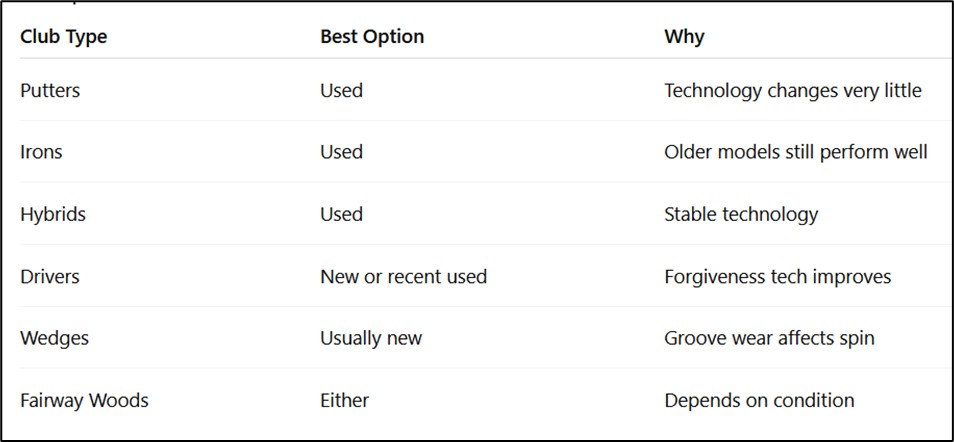
Putters are arguably the smartest second-hand option.
Putter technology does not depreciate. A blade or mallet from ten years ago performs identically to a new one of the same design. Grooves do not wear. There is no face insert that degrades. The only thing that changes is the look, and if you find a head shape and weight you like, that is all that matters.
The pre-owned/second-hand putter market is huge.
Sadly, golfers are notoriously quick to blame the flat stick and move on to the next model, which means the supply of barely-used putters at reasonable prices is consistently healthy.
One thing to check if you are buying a used model – the R&A’s equipment conformance rules cover putter shaft alignment, face angle limits, and anchoring restrictions that changed in 2016.
Most putters are unaffected, but if you are looking at a long putter or belly putter from before those rule changes, it is worth a quick check before you buy.

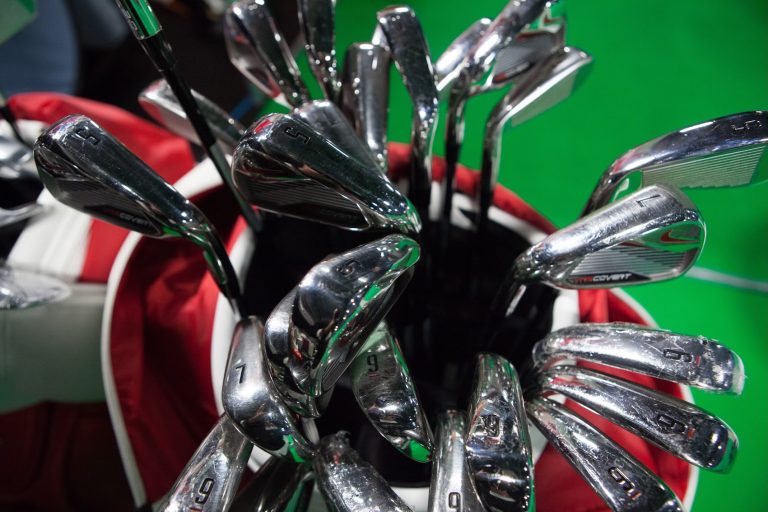
Unless you are a scratch golfer who has been custom-fitted and knows exactly what head, shaft, and loft combination suits your swing, buying used irons can also be a smart move.
Irons from major manufacturers hold up well over time. A set of cavity back irons from three or four years ago will perform almost identically to the current model.
The technology gap between iron generations is modest – considerably more modest than the marketing suggests.
Used irons from reputable retailers can be found in excellent condition, often barely played.
Now, sites like Next 2 New Golf specialise in certified pre-owned clubs, which means you can pick up a quality set that has been properly inspected and graded – not just listed by a stranger on an auction site with optimistic photography.
The same reasoning applies here. Hybrid technology has been relatively stable for a number of years.
Unless you are chasing the latest adjustable hosels or a specific shaft profile, a two- or three-year-old hybrid at half the retail price is a sensible buy.
This is the one area where new – or at least recent – technology makes a genuine difference.
And if you believed the hype in most golf manufacturer’s advertising over the last ten years e.g. “10% more distance than our previous models”, we’d all be reaching Par 4’s in one shot.
Modern drivers are built around aerodynamics, adjustable weighting, and face flex technology that has advanced meaningfully over the past four or five years.
The difference between a driver from 2018 and one from 2023 is not trivial, particularly for mid-to-high handicappers who benefit most from a higher moment of inertia and a more forgiving face.
It is always worth checking the USGA’s list of conforming driver models if you are buying older used equipment, as some models can fall off the conforming list over time – something to be aware of if you play competitive golf.
That said, you do not need the very latest release.
A driver from two or three seasons back, in certified pre-owned condition, is a reasonable middle ground. You get the technology benefit without paying the new-release premium.
If you are unsure where to start when shopping for a driver, a guide to selecting new golf clubs covers the key variables – loft, shaft flex, and launch characteristics – that actually determine which head suits your swing.
A popular club for most golfers.
The technology has advanced, but not as dramatically as the drivers have.
A fairway wood from three or four years ago from a major brand is still a perfectly capable club.
If you are using it mainly as a long second-shot option rather than off the tee, the marginal performance difference between generations is unlikely to trouble you.
Used fairway woods are generally good value, provided the crown and face are free from significant damage.
Wedges are the one club type where their use is a riskier buy, not because of technology, but because of groove wear.
Grooves are what generate spin and control around the green.
After a few hundred rounds, they wear down noticeably, and the performance loss is real. Golf Monthly’s wedge buyers guide covers groove condition in detail and is worth a read before any pre-owned purchase.
Sharp, well-defined grooves are fine. Rounded, worn-down grooves will cost you control over whether or not you play competitively.
The sweet spot in the used wedge market is clubs that are one or two seasons old but barely played. Tour-style wedges from the previous generation in near-new condition can offer real value – just inspect the grooves carefully before you commit.

When buying used, the grading system matters a lot more than most buyers realize.
Most reputable retailers use a scale along these lines:
The middle grade is often the best value.
A-grade clubs carry a price premium that narrows the gap with new ones considerably. C-grade clubs can require grip replacements or other remedial work that adds cost back in.
Always check whether grips are included in the condition assessment.
As I noted in our guide to buying second-hand golf clubs, regripping a set of irons can cost anywhere from £100 to £200, depending on grip choice – a figure that is easy to overlook when comparing a headline pre-owned price against the cost of going new.
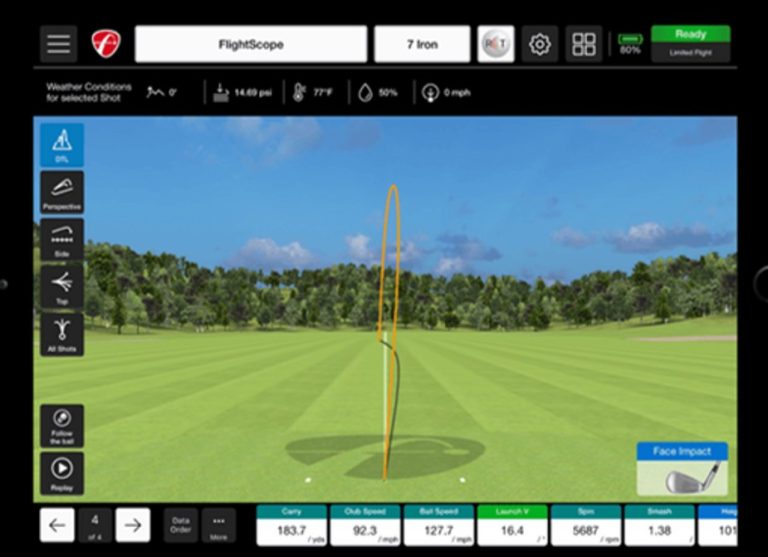
One thing that applies equally to new and used clubs: do not buy anything significant without understanding your swing data first.
A custom fitting session with a PGA professional – ideally using a launch monitor – will tell you your actual swing speed, launch angle, and spin rate.
That data is valuable at any price point. It prevents you from spending money on a driver designed for a faster swing than yours or on irons with the wrong shaft flex for your tempo.
Fitting does not mean buying new.
Many fitters will work with you to identify used models that match your numbers, and a good fitter will honestly tell you if a club you already own is close enough to keep or is genuinely holding you back.
It shifts the buying conversation from “which looks good” to “which actually suits my game” – and that is a shift worth making regardless of your budget.
For most golfers, the sensible approach breaks down something like this:
The goal is not to spend as little as possible. You should spend your budget where it will actually improve your game.
The pre-owned market for golf clubs has matured significantly.
Reputable retailers now offer grading standards, return policies, and warranties that make buying used far less of a gamble than it once was.
You can assemble a bag that performs well at every position without paying full retail for each stick.
Buy smart, get fitted when you can, and spend any savings on lessons instead of new gear you haven’t outgrown.

Yes. For most golfers, buying used golf clubs offers far better value than buying everything new. Irons, putters, hybrids, and fairway woods often retain most of their performance for years, especially when bought from reputable pre-owned retailers. The key is choosing clubs in good condition with shafts and specifications that suit your swing.
Putters, irons, hybrids, and fairway woods are usually the best golf clubs to buy used. Technology changes slowly in these categories, so clubs that are a few years old can still perform extremely well. Buying certified pre-owned clubs can help reduce costs significantly without sacrificing performance.
Drivers and wedges are usually the strongest candidates for buying new. Modern drivers benefit from recent advances in forgiveness and ball speed technology, while wedges lose performance as their grooves wear down over time. If buying these clubs used, condition matters far more than age alone.
For most golfers, clubs that are between two and five years old offer the best balance between value and performance. Irons and putters can remain effective for much longer, while older drivers may lack the forgiveness and adjustability found in newer models.
Yes, provided they are relatively recent models and in good condition. Drivers from the past two to four years still offer excellent performance for most golfers. Older drivers can still be playable, but modern designs tend to provide more forgiveness and improved launch characteristics.
Yes. Wedge grooves wear down through repeated use, especially from bunker shots and range practice. As the grooves become less sharp, spin and stopping power decrease noticeably. Frequent golfers often replace wedges more regularly than other clubs for this reason.
Buying second-hand golf equipment is generally safe if you buy from a reputable retailer or certified pre-owned specialist. Trusted sellers usually provide condition grading, authenticity checks, and return policies that reduce the risks associated with private marketplace purchases.
In most cases, yes. Beginners are usually better off buying used golf clubs while developing their swing and understanding what suits their game. Spending heavily on brand-new equipment early on rarely improves performance as much as lessons, practice, and properly fitted clubs.

Ian is the Editor of The Social Golfer. He has been reviewing golf courses for more than ten years. Ian was the Marketing Director of the London Golf Show from 2011-2016. He has had golf articles published in Golf News Magazine, Today’s Golfer and Golf Business News. Ian is also the Communications Director for The Cairns Cup (Golf’s Premier Disability Match Play Event).

The Social Golfer is a global online platform that helps golfers of all abilities:
TSG remains the most accessible platform for golfers to play more, travel more, and meet like-minded players.
For more information, visit www.thesocialgolfer.com
HEADER IMAGE - Mistwood GC
Courtesy of Raymond Hearn, Course Architect www.rhgd.com
__________________________________
Got a story you would like us to publish? Call us on 01277 200207
Alternatively, send us a message via our contact form... CONTACT US >>
FOLLOW US
© 2026 Built by www.mc2marketing.co.uk.
